Orangery roof lanterns: sizes, glass and ventilation
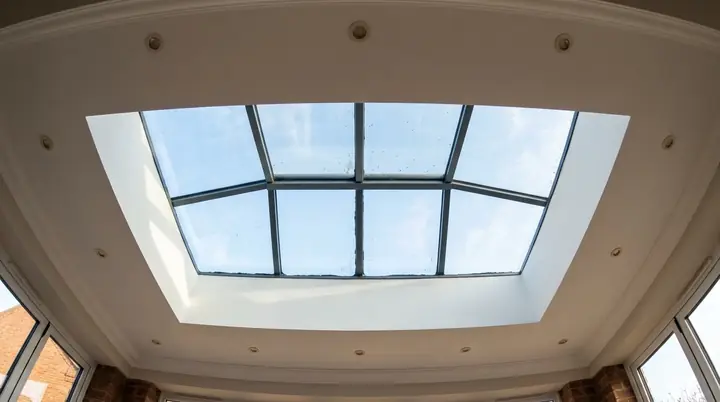
The lantern does more than any other part to decide how an orangery feels. Its size, glass and ventilation set the light level, the summer temperature and the noise in rain.
How big should an orangery lantern be?
Between a third and half of the roof area suits most rooms. Smaller than that and the room can feel like a flat-roofed extension; larger and you lose the plastered border that carries lighting and gives the room its shape.
Which glass should I choose?
Use a solar control, low-emissivity unit on south and west facing roofs to cut summer heat gain while keeping winter warmth in. A self-cleaning coating is worthwhile because lantern glass is awkward to reach.
Do I need an opening vent?
It helps. Warm air collects in the lantern, and a vent at the ridge lets it out. Electric vents with a rain sensor and thermostat are the most used option.
Aluminium, timber or uPVC?
Aluminium gives the slimmest rafters and suits most new orangeries. Timber, usually with aluminium cappings outside, suits period joinery. uPVC costs least and has the thickest sections.
One lantern or two?
Rooms longer than about 6m often look and perform better with two smaller lanterns than one long one, and the roof structure between them is simpler.
Next: get a guide price, see orangery prices or browse orangery types.
Ready to plan your orangery?
Book a free design visit or get a guide price in under a minute.
Get a guide price Call 0800 088 6248